
Doorglass Options for Front and Entry Doors in Durham Region

Updated: Aug 27
The glass in your front door does more than let in light. It shapes the first impression your home makes from the street, controls how much of your entryway the outside world can see, and plays a real role in how warm your foyer stays through a Durham Region winter. At GT Doors, we've spent more than 20 years helping homeowners across Whitby, Ajax, Pickering, Oshawa and the surrounding area choose doorglass that looks right and performs the way it should. This guide walks through the doorglass options worth knowing about before you replace an entry door.
[IMAGE 1 — suggested filename:

What Is Doorglass, Exactly?
Doorglass — sometimes called a decorative glass insert or a "lite" — is the glazed panel set into a front or entry door. It can be a small window near the top, a tall panel running most of the door's height, or a full-view piece of glass. Doorglass is manufactured as a sealed unit, usually with two or three panes and a decorative or textured layer, then framed and fitted into the door slab. Because it's a self-contained unit, you can pair almost any glass design with a fibreglass or steel door.
The glass is only one part of the decision. You're also choosing how much of the door it covers, how private it is, and how well it insulates. We'll take those one at a time.
Glass Size and Placement
The size and position of the glass changes both the look of the door and how much daylight reaches your entryway.
Full-lite and three-quarter glass
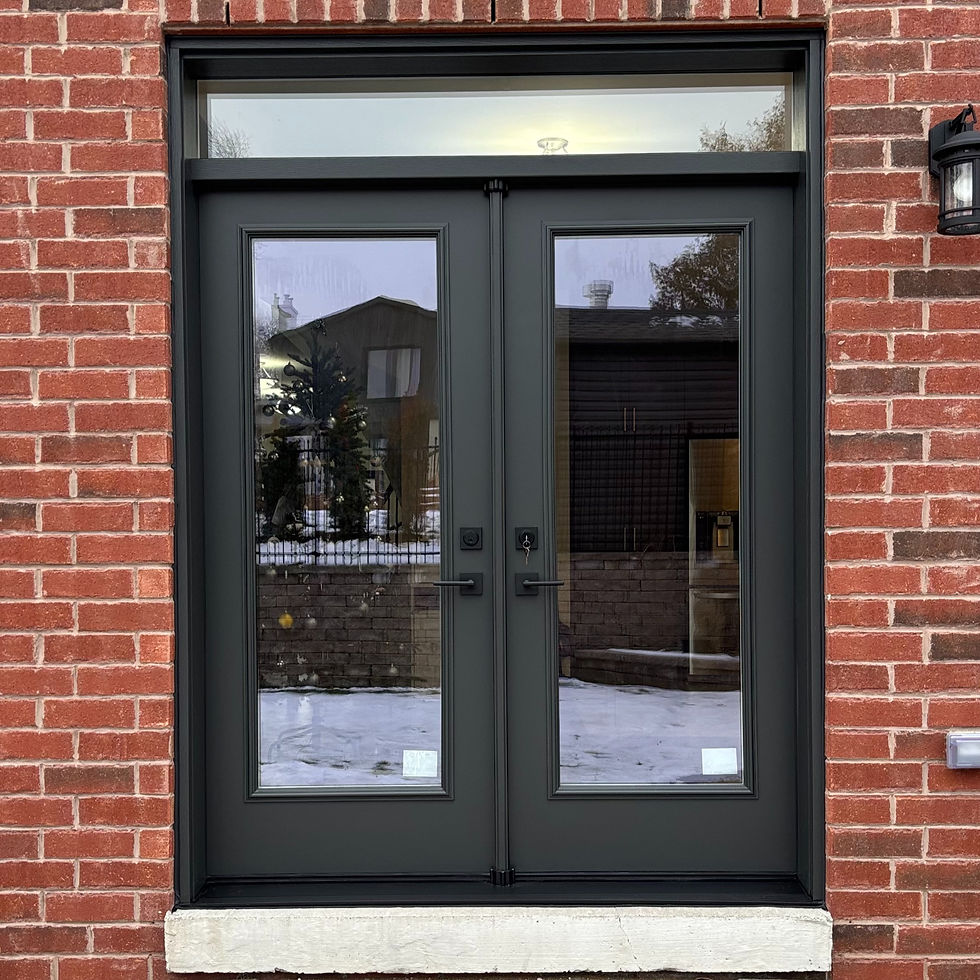
A full-lite door is mostly glass, framed by a slim border of door material. Three-quarter glass runs from near the top of the door down to about knee height. Both flood a foyer with daylight and suit modern and transitional homes especially well. If your entry faces a private yard or a quiet street, these larger formats are hard to beat.
Half-lite and smaller lites
A half-lite places glass across the upper half of the door and keeps the lower half solid. It's a classic, versatile look that works on almost any style of home. Smaller decorative lites — a single pane or a cluster near the top — give you a touch of light and detail while keeping most of the door solid, which many homeowners prefer for privacy and a more traditional feel.
Sidelites and transoms
If you want more glass without changing the door itself, sidelites (narrow glass panels beside the door) and transoms (a panel above it) are the answer. They brighten a dark entry and make a standard doorway feel grander. Sidelites can be matched to the door's glass design or given obscure glass for privacy where the panels sit closest to eye level.
[IMAGE 2 — suggested filename:

Balancing Privacy and Light
The most common question we hear about doorglass is some version of "will people be able to see inside?" The good news is that privacy and natural light are not an either/or choice. Textured and obscure glass scatters light so your foyer stays bright while the view in is blurred or blocked entirely.
Decorative glass comes in a range of privacy levels, from nearly clear to fully obscured. Heavily textured, frosted or patterned glass — along with designs that use caming (the metal framing between glass pieces) and bevels — offers strong privacy near the door. For the largest full-view doors, many homeowners choose internal blinds: a slim blind sealed between two panes of glass that you raise, lower or tilt with a control on the door. The blinds never collect dust because they're enclosed, and you get full light or full privacy on demand.
A quick way to think about privacy
As a rule of thumb, the more textured or patterned the glass, the more privacy it gives. Clear or lightly patterned glass maximizes the view out and the light in; heavy texture, frosting or between-glass blinds maximize privacy. Where the glass sits matters too — glass up high is naturally more private than glass at eye level.
Decorative Styles
This is where doorglass gets to show some personality. The right design ties your entrance to the architecture of your home.
Clear and textured glass
Clear glass gives a clean, contemporary look and the brightest entry. Textured glass — rain, granite, glue chip, reeded and similar patterns — adds interest and privacy without any colour or metalwork, which keeps it feeling modern and understated.
Leaded, caming and wrought-iron designs
Traditional and transitional homes often suit glass with decorative caming — the lines of metal that outline a pattern within the glass — in finishes like black, brass, nickel or patina. Wrought-iron doorglass, where a scrolled iron grille sits over the glass, makes a bold, elegant statement and pairs beautifully with the brick and stone exteriors common across Durham Region.
Matching glass to your home's style
Modern homes lean toward clear or lightly textured glass in simple rectangular shapes. Traditional homes carry ornate caming, bevels and arched designs well. Transitional homes — the majority of newer builds in Whitby, Ajax and Oshawa — land somewhere in between, often a clean geometric pattern with a subtle bevel. If you're weighing overall style, our guide to choosing the perfect front door and our roundup of top front door designs in Whitby both go deeper on how the glass fits the bigger picture.

Doorglass and Energy Efficiency
In our climate, the glass you choose affects your comfort and your heating bill. Older single-pane or worn-out sealed units are a common source of cold drafts and foggy condensation. Modern doorglass is built as an insulated glass unit with real energy performance in mind.
Look for a few things. Low-E (low-emissivity) coatings reflect heat back into your home in winter and block unwanted solar gain in summer. Argon gas sealed between the panes slows heat transfer better than plain air. Double or triple glazing adds insulating layers. Together these keep the area around your door warmer and cut down on the condensation that plagues older glass. Doorglass performs best as part of a well-built, properly installed door — which is why we treat the glass, the slab and the installation as one system rather than three separate parts.
Doorglass on Fibreglass vs. Steel Doors
You can fit decorative glass into either a fibreglass or a steel door, and the glass options are largely the same. The difference is in the door around it. Fibreglass entry doors resist dents, won't rust and can be finished to look like real wood grain — a popular pairing with larger, more decorative glass. Steel entry doors are budget-friendly and very strong, and pair well with smaller or mid-size lites. We'll help you match the glass to the door material and finish so the whole entrance works together. You can browse our full range of doorglass options to see what's possible.
[IMAGE 4 — suggested filename: doorglass-fibreglass-vs-steel-comparison.jpg

Caring for Your Doorglass
Doorglass is low-maintenance by design. Clean it with a soft cloth and a standard, non-abrasive glass cleaner — avoid harsh scrubbing pads that can scratch coatings or caming. For glass with caming or wrought iron, wipe gently along the metalwork and dry it to prevent water spots. If you ever notice fog or moisture trapped between the panes, the sealed unit has failed and the glass insert should be replaced; that's a straightforward fix that doesn't require a whole new door.
Frequently Asked Questions
Can I add glass to my existing front door?
In some cases, yes — certain doors are built to accept a glass insert — but the more reliable route is often a new door with the glass already engineered into it, especially if your current door is older or in poor shape. We can assess your existing door during a free in-home visit and tell you honestly which option makes sense.
Will decorative doorglass make my home less secure?
Modern doorglass units are made from tempered or laminated safety glass and are sealed into the door, not loosely fitted. Paired with a quality door and good hardware, decorative glass does not meaningfully reduce security. For added peace of mind, smaller lites and obscure glass keep your interior out of view.
How much does doorglass add to the cost of a door?
It varies with the size and design — a small clear lite adds relatively little, while a large full-view unit with decorative caming or between-glass blinds costs more. Because pricing depends on the specific door and glass, the best way to get an accurate figure is a free quote.
Does glass in a door cause drafts?
A properly built, well-installed insulated glass unit shouldn't. Drafts usually come from an old failed seal, a poor fit or an aging door — all of which a modern door and professional installation resolve.
Find the Right Doorglass for Your Home
Whether you want to flood your foyer with light or keep your entry private and warm, the right doorglass makes a real difference — and we'll help you find it. GT Doors serves Whitby, Ajax, Pickering, Oshawa, Clarington, Uxbridge, Scarborough, Courtice, Stouffville, Bowmanville, Markham and Scugog with more than 20 years of experience. Get a free quote or call us at 905-903-9598.
Comments